So you want to learn to fly — here's where to actually start
Most people who want to learn to fly spend months reading about it before doing the single thing that matters most: calling a flight school and booking an intro flight.
Stop researching and go fly something
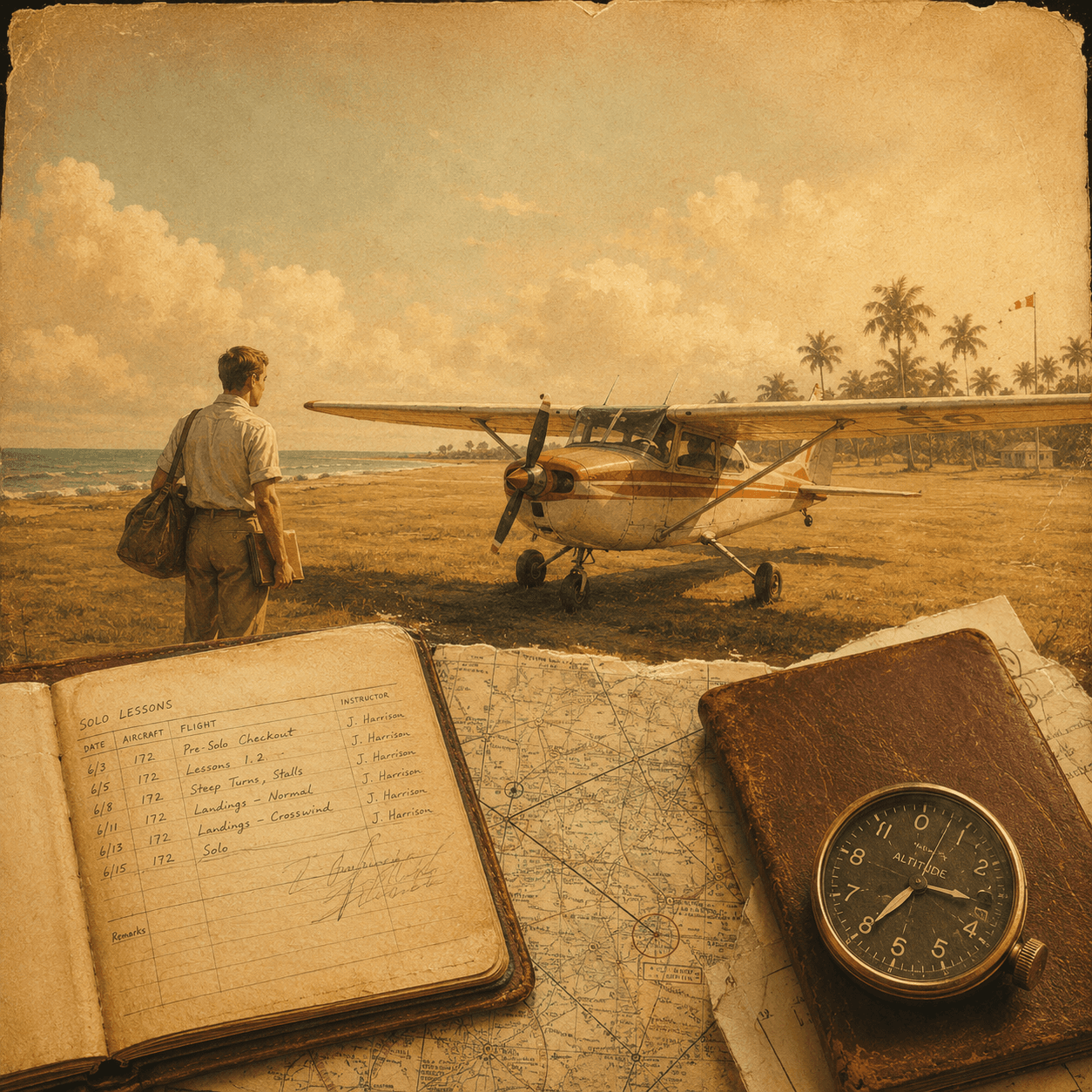
The first move is a discovery flight. Almost every flight school offers one for somewhere between $100 and $200. You sit in the left seat, a CFI sits next to you, and you actually fly the airplane. Nothing you read online replicates that thirty minutes. Book it before you finish this article.
Once you have that flight, you will know whether this is real or not. Most people come back wanting more. A few decide it is not for them. Either answer is useful and costs you very little.
The certificates, in plain terms
The private pilot certificate (PPP) is the starting point for most people. It lets you fly yourself and passengers under visual flight rules (VFR) in good weather. The FAA requires a minimum of 40 flight hours, though the national average runs closer to 60 to 70 by the time students actually pass the checkride.
Below the private certificate is the sport pilot certificate, which requires only 20 hours and covers lighter aircraft. It is a faster and cheaper path, but it comes with real limitations on where and when you can fly.
Above the private certificate is the instrument rating, then commercial, then ATP. Each one adds capability and opens more doors. You do not need to plan all of that now.
What it actually costs
Figure on $10,000 to $15,000 for a private certificate at a Part 61 school using a small trainer like a Cessna 172 or Piper Cherokee. Part 141 schools follow a structured FAA-approved syllabus and can be slightly more efficient, but costs vary widely.
Funding options exist. AOPA (the Aircraft Owners and Pilots Association) maintains a scholarship page at aopa.org that lists dozens of programs by category and eligibility. The EAA (Experimental Aircraft Association) offers the Ray Aviation Scholarship, which covers up to $11,000 toward a private certificate for pilots under 19. Women in Aviation International runs a scholarship program that has distributed over $10 million since 1994. These are real money, not nominal awards.
The organizations worth knowing
AOPA is the largest general aviation organization in the country, with about 600,000 members. Their website has training resources, safety courses, airport directories, and advocacy updates. Membership is worth it for the legal services alone if you ever get an FAA letter you do not understand.
EAA is centered on builders, sport pilots, and people who love the culture of aviation at least as much as the flying itself. Their AirVenture fly-in at Oshkosh every July is the largest aviation event in the world.
FAA Safety Team (FAASTeam) runs free online courses at faasafety.gov. These are dry but accurate, and several count toward your written test preparation.
Where to keep learning online
The AOPA Air Safety Institute produces free video courses and accident case studies that are genuinely good. Rod Machado's written and video materials are thorough and approachable. For ground school, Sporty's and King Schools both offer structured courses that pair with the FAA written exam.
Aviation Stack Exchange is useful for specific technical questions. The r/flying subreddit is active and generally gives reasonable advice, though you will also get the full range of internet opinions.
Pilot training is not complicated to begin. The barrier is almost always psychological, not logistical. Call a local flight school today, ask about a discovery flight, and go do it.